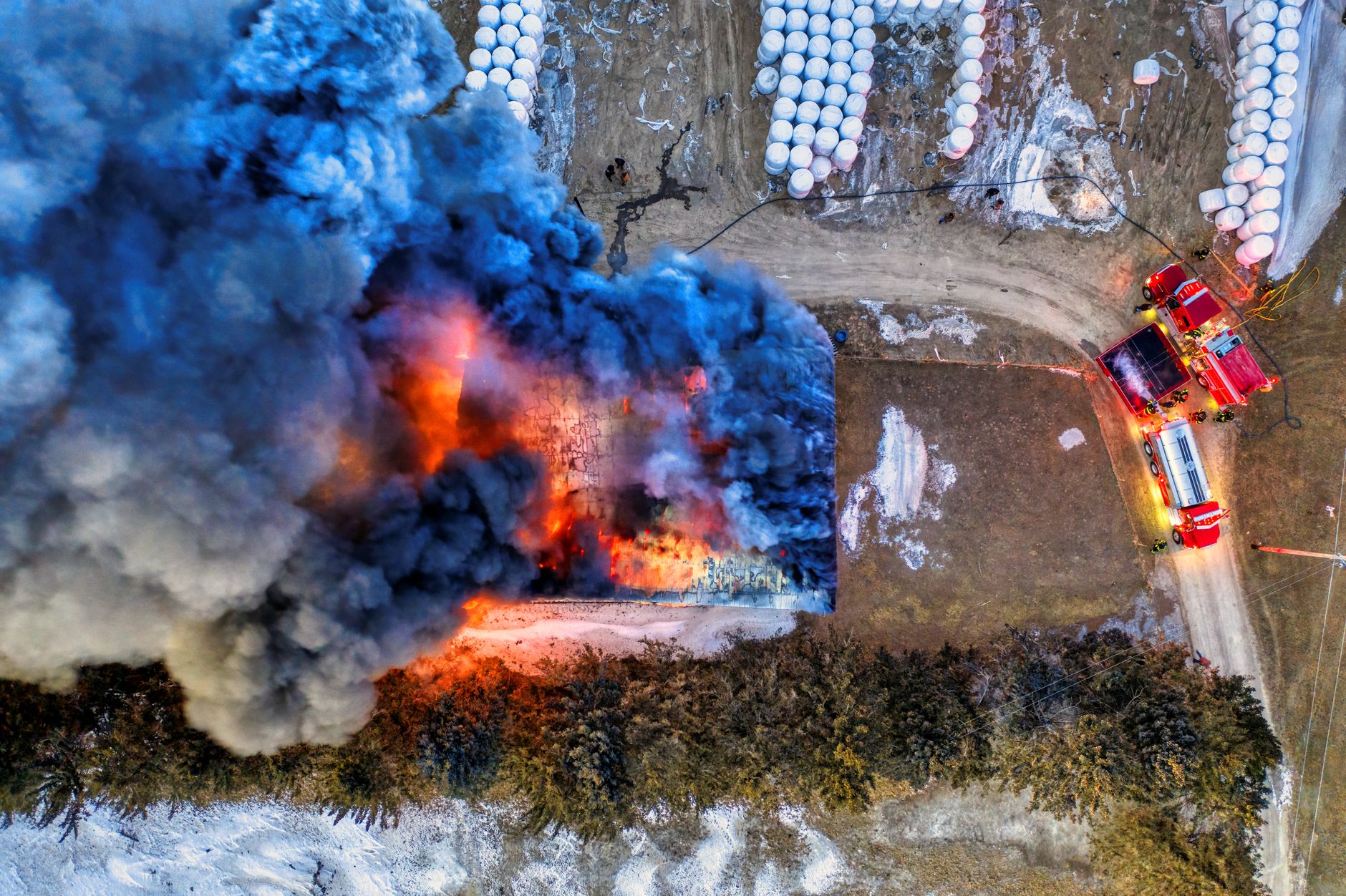
Negligence claims allege Southern California Edison and parent Edison International failed to maintain equipment, clear vegetation, and shut off power despite severe wind warnings. Plaintiffs say that failure let electrical arcing from an idle transmission tower start the Eaton Fire.
The fire began Jan. 7, 2025, near Altadena Drive and Midwick Drive. Per CAL FIRE, CAL FIRE's finalized incident update reports 9,419 structures destroyed, 1,076 damaged, and 19 civilian deaths.
Official resources:
- Read the official guidance from Ca — Use this primary source to verify the official guidance.
- Read the original research from Insurancejournal — Use this page to review the original research.
Table of Contents
- What do investigators say caused the fire?
- What failures do negligence suits allege?
- How could an idle tower spark a fire?
- What other claims affect possible payment?
- Should victims take fast payment or stay in court?
What do investigators say caused the fire?
As described in a statement from Individual Plaintiffs' Liaison Counsel, a joint CAL FIRE–Los Angeles County Fire Department supplemental investigation concluded in August 2026 that arcing at a tower paddle caused the fire. The arcing occurred at the southwest conductor paddle of an out-of-service SCE Mesa-Sylmar transmission tower.
That finding focuses the lawsuits on utility equipment. Negligence turns on preventable risk, so plaintiffs must link unsafe equipment to the place and time the fire began.
What failures do negligence suits allege?
More than 47,000 plaintiffs speak for over 18,000 households and businesses, according to a Gibbs Mura case summary. They allege SCE and Edison International failed to maintain equipment, inspect lines, manage vegetation, and shut off two towers. The shutdown claim centers on weather warnings.
Negligence suits allege SCE kept lines energized despite National Weather Service Red Flag warnings, Verus LLC reports. One complaint cites a 60-mph shutoff threshold exceeded in Eaton Canyon. In plain terms, negligence means failure to use reasonable care. Here it means plaintiffs say SCE saw high risk and did not act as a careful operator would.
📨 Get Free Mass Tort Guides Alerts
Free · No spam · Unsubscribe anytime
How could an idle tower spark a fire?
Plaintiffs allege a Jan. 7 power surge on a nearby active line created a magnetic field.
That field briefly reenergized a dormant cable on a tower idle since 1971 and threw sparks into dry brush, according to Insurance Journal's litigation report. The theory tries to explain how dead equipment can still spark. It also shows why wind, dry brush, and line placement matter to the claim.
What other claims affect possible payment?
Negligence is not the only path to payment. Judge Laura Seigle denied SCE's bid to bar inverse condemnation, Insurance Journal reports. That ruling preserves a strict-liability theory for property damage from utility equipment, even without proven negligence. The first bellwether trial is set for Jan.
25, 2027. Separately, the U.S. Department of Justice filed civil suits Sept. 4, 2025, seeking about $77 million for the Eaton and Fairview fires, Utility Dive reports. Those suits allege negligence, trespass by fire, and damage to National Forest lands.
Should victims take fast payment or stay in court?
SCE disputes negligence liability and points fire victims toward its Wildfire Recovery Compensation Program, Insurance Journal reports. Accepting a program settlement generally bars further suit.
Fast money involves a tradeoff. Before you decide, take these practical steps: Weigh certain faster payment against the larger but slower and less certain claims available at trial.
- preserve housing, repair, medical, and business-loss records
- track filing and program deadlines in writing
- get independent legal advice before signing a release
You Might Also Like
- Spinal Cord Stimulator Lawsuit Settlements Explained for MDL Claims
- Depo-Provera Lawsuit Payouts for Brain Tumor Claims
- 3M Earplugs Lawsuit Settlement: Are Claims Still Being Filed?