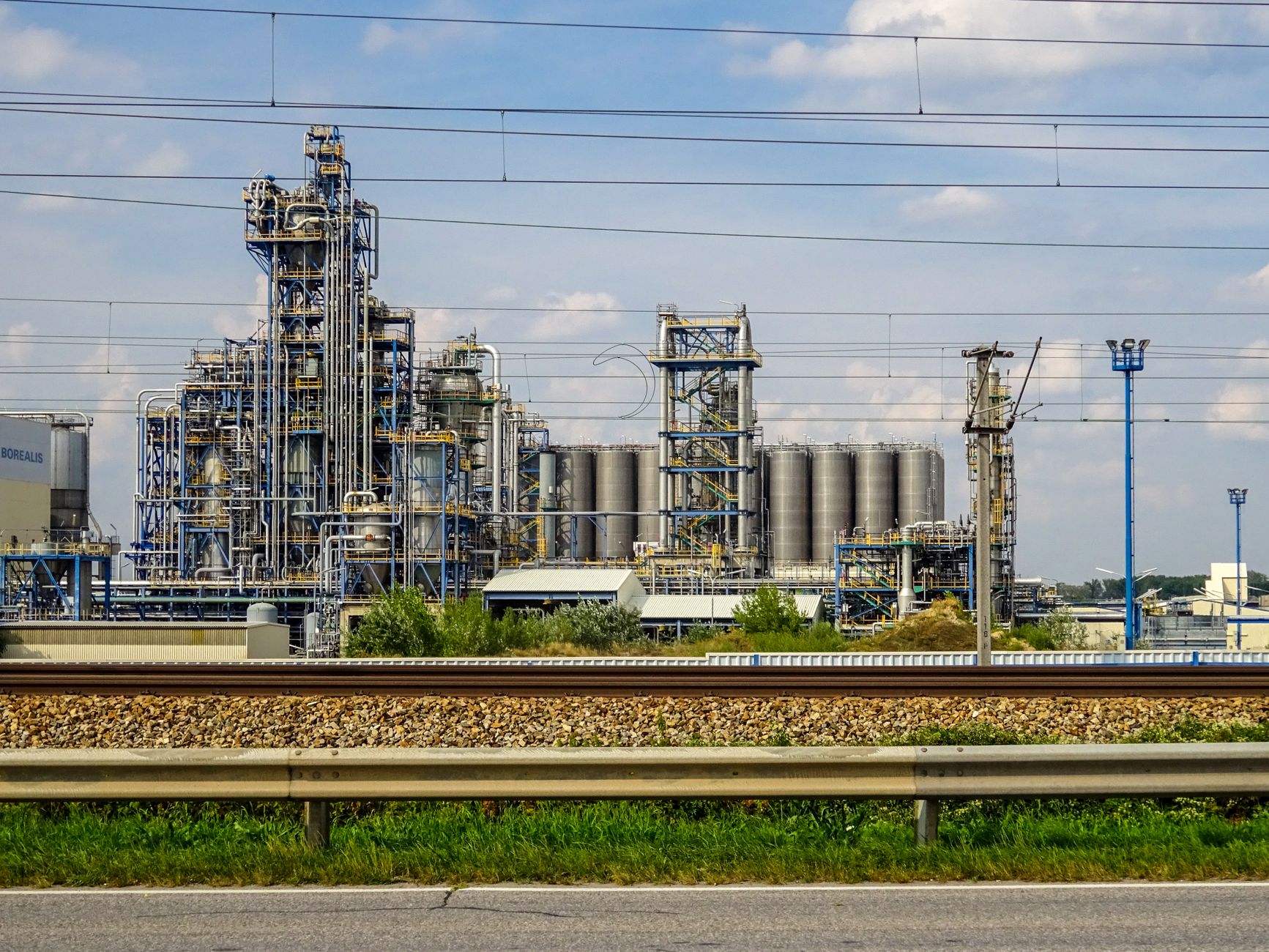
Residents near a chemical plant explosion can generally claim three things: property damage, out-of-pocket evacuation and relocation costs, and personal injury or illness tied to the release. Those claims are usually pressed as a class action or a coordinated group of suits against the plant operator, and sometimes against the suppliers whose equipment failed.
What you cannot usually claim is the fear of getting sick later. Courts in most states still require a present physical injury before they will pay for anything, including future medical screening. The difference between those two categories decides whether a household recovers money or nothing at all.
Table of Contents
- The four legal theories residents plead together
- What counts as a recoverable loss
- Where the money comes from, and who ends up paying
- The exposure problem: why "I breathed it" may not be enough
- What to do in the weeks after a release
- Federal investigations do much of the proving for you
- Frequently Asked Questions
The four legal theories residents plead together
A blast suit rarely rests on one argument. The standard package is negligence, gross negligence, nuisance and trespass — negligence meaning the plant failed to use reasonable care, nuisance meaning it unreasonably interfered with your use of your own home, and trespass meaning its smoke, debris or chemicals physically entered your property. That is exactly the combination filed after the Valero refinery explosion in Texas. According to KFDM's report on the filing, a March 2026 class petition by Brent Coon & Associates against Valero Energy Corp.
and Valero Refining–Texas L.P. in Jefferson County District Court pleaded all four on behalf of residents, businesses and property owners across Jefferson and Orange counties. The reason to plead them together is coverage. Negligence needs proof the operator acted carelessly; trespass and nuisance can succeed on the simpler fact that something left the plant and landed on you.
What counts as a recoverable loss
The claimable categories are narrower and more concrete than most residents expect. Structural damage to a house, lost profits for a nearby business, and documented physical injury are the core three. Two more Jefferson County residents moved to join the Valero case in a filing dated March 27, 2026 claiming precisely that set, as 12NewsNow reported. You do not need an explosion, or an injury, to have a claim.
A chemical emergency that forces people out of their homes creates its own losses: hotel bills, meals, lost use and enjoyment of the property. The May 23, 2026 class action against GKN Aerospace over the Garden Grove, California chemical tank emergency claimed relocation and shelter expenses on that theory; co-counsel DiCello Levitt describes the filing, and the Orange County District Attorney announced a settlement submitted for judicial approval on October 12, 2026. Keep the paper. Receipts for a motel, a boarded window or a replaced HVAC filter are the evidence that moves a property-damage claim from an estimate to a number.
Where the money comes from, and who ends up paying
Operators are the obvious defendant, but they are not the only one. In August 2026 a Harris County jury returned a $61.5 million verdict partly against 3M over the 2020 Watson Grinding explosion in Houston, following a November verdict of $118 million against Watson Grinding and 3M in a separate suit; 3M continues to deny responsibility, according to Houston Public Media. Component and equipment suppliers are fair targets when their part is implicated. Aggregate payouts in these cases are large, and they are usually structured.
The Chemtool fire and explosion in Rockton, Illinois settled for $94.5 million, with class members required to release Chemtool, Lubrizol and related entities in order to collect. Solstice Advanced Materials agreed to pay $80 million covering property-damage suits by Metropolis, Illinois and Massac County, a resident class action limited to people within three miles, and roughly two dozen individual illness claims allotted $10 million. Two features of that Solstice deal are worth noticing. A geographic radius defined who was in the class, and the serious illness claims were carved out and funded separately — a signal that bodily-injury claims and property claims are often valued on different tracks.
The exposure problem: why "I breathed it" may not be enough
This is the hard limit. Being exposed to a toxic release, without a diagnosed present injury, usually is not a compensable claim. The New Hampshire Supreme Court held in 2023 that the mere existence of an increased risk of future disease does not state a claim for medical monitoring costs absent present physical injury, noting that a 2020 bill creating such a claim had been vetoed; NHPR covered the ruling.
📨 Get Free Mass Tort Guides Alerts
Free · No spam · Unsubscribe anytime
Medical monitoring — a defendant paying for periodic screening of exposed people — is available in some states and not others, and the map is still being drawn. The Georgia Supreme Court heard argument in April 2026 on whether plaintiffs exposed in the 2024 BioLab Conyers fire with no current injury may obtain monitoring as equitable relief, per Atlanta News First. The practical effect: ask early what your state allows. In a state that rejects monitoring, the route to recovery runs through property damage, evacuation costs and any injury a doctor can document now.
What to do in the weeks after a release
The window for building a usable claim is short, and most of the work is documentation rather than legal strategy.
- Photograph damage before repairs, with dates — cracked walls, blown windows, residue on siding and vehicles.
- Save every expense receipt from the evacuation: lodging, meals, fuel, boarding pets, missed shifts.
- See a physician promptly and describe the exposure, so symptoms are recorded contemporaneously rather than reconstructed later.
- Check whether your address falls inside any radius a filed class uses; in the Solstice case that line was three miles.
- Read any release form before accepting a payment. The Chemtool settlement required class members to release Lubrizol and related entities, not only the plant operator.
Federal investigations do much of the proving for you
Residents rarely have the means to establish what caused a blast. Federal investigators often do it first, and their findings become the backbone of civil claims. The U.S.
Chemical Safety Board's final report, issued February 26, 2026, on the July 2023 Dow explosion in Plaquemine, Louisiana traced the event to portable work lights left inside a reflux drum, after a release of more than 31,000 pounds of ethylene oxide forced a shelter-in-place on hundreds of residents. The CSB published the report with that causal chain spelled out. A finding like that is a gift to a negligence claim, because it identifies a specific avoidable act. It also sets the pace: CSB reports can take years, and a claim may need to be filed long before the report lands.
Frequently Asked Questions
Do I have to live within a certain distance of the plant?
Often yes. Classes are frequently defined by radius — the Solstice Advanced Materials resident class was limited to people within three miles of the site.
Can renters claim, or only homeowners?
Loss of use and enjoyment of a home, plus relocation and shelter expenses, were among the claims in the GKN Aerospace Garden Grove case, and those losses attach to occupancy rather than to the deed. Structural damage claims belong to the property owner.
Should I wait for the federal investigation before filing?
Usually no. The CSB took until February 2026 to report on a July 2023 explosion, and filing deadlines in your state will not wait that long.
You Might Also Like
- Baron & Budd PFAS Settlement: How Claim Payouts Will Be Calculated
- Arbitration Clause Liability: Can You Opt Out Before Filing a Claim?
- Microplastics Lawsuit Risk: What the New Webinar Signals for Claimants