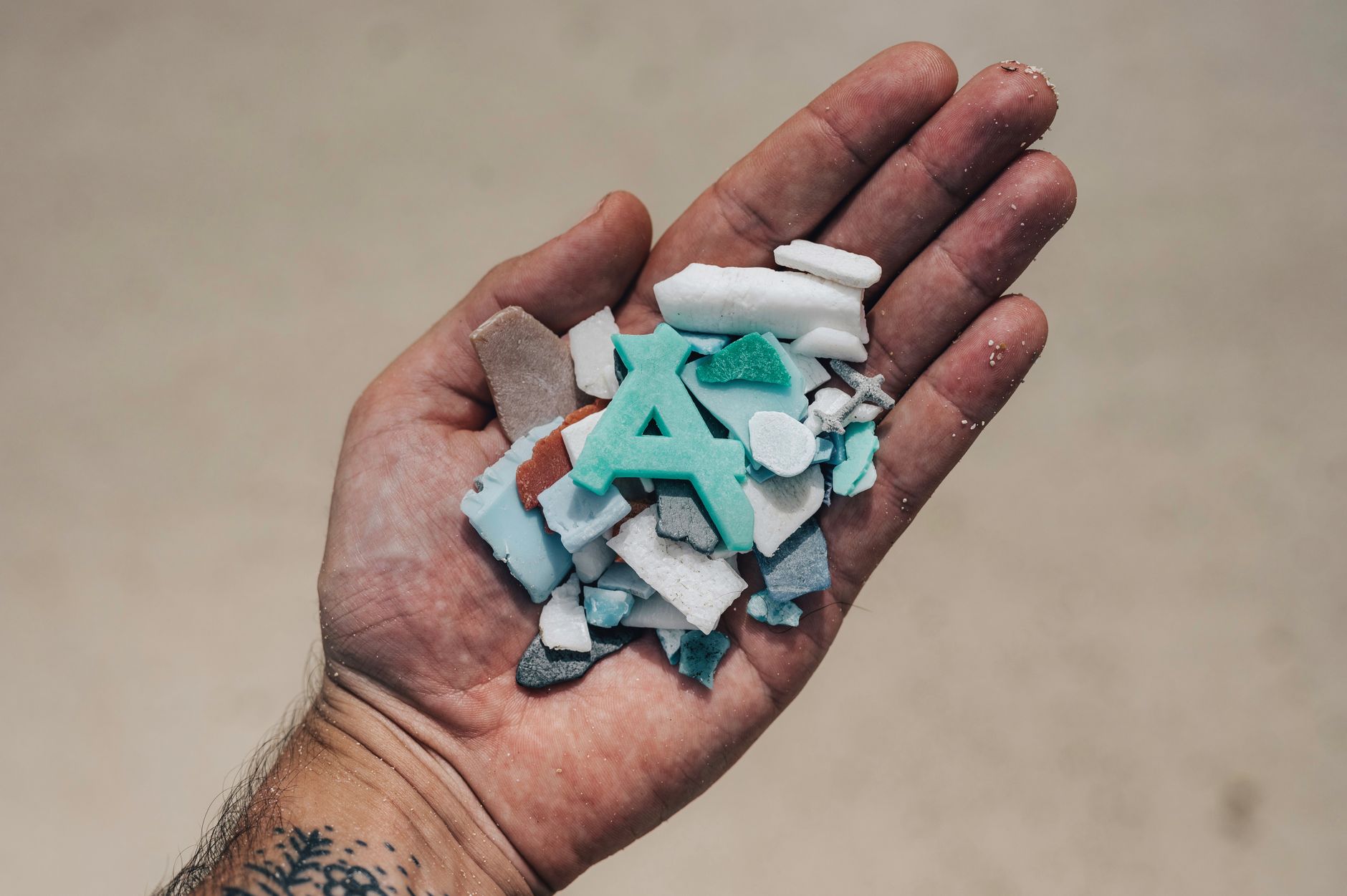
Two defense-side CLE webinars on microplastics litigation are now on the calendar, and for claimants the signal is narrow but clear: the defense bar expects toxic-tort claims, not label claims. Crowell & Moring's program, "Microplastics: Science, Regulation, and Legal Risk," is listed for 1:00–2:00 p.m. ET on Nov.
17, 2026, with a second date of 12.10.26, and covers regulation, toxic tort exposure, greenwashing and consumer-protection suits, according to the firm's webinar listing. Microplastics are plastic fragments small enough to enter water, food and air — typically under five millimeters. The legal question is not whether they are present but whether a specific plaintiff can prove a specific product put them in a specific body. The webinars tell you where defendants think that fight will happen.
Official resources:
- Register through Federalregister’s official page — Use this page to review requirements and register directly.
- Explore the official data from Epa — Use this primary source to review the underlying data.
Table of Contents
- What the panel lineup actually tells you
- The PFAS comparison, and why defendants are making it
- The regulatory trigger is weaker than it sounds
- What courts have done so far
- What a viable claim now requires
- Frequently Asked Questions
What the panel lineup actually tells you
The Crowell program pairs litigators Pete Condron and Monty Cooper with two exposure scientists: Dr. Steven Boomhower of Gradient Corporation and Rachel Zajac-Fay of Geosyntec Consultants. That is a science-plus-law defense lineup, and its composition is the useful detail. When defense counsel brings exposure scientists onto a CLE panel, the contested ground is causation — the link between a product and a measured dose in a person.
Firms do not staff a panel this way for a cases-to-watch update. Robinson+Cole's Retail & Consumer Products Law Observer posted the registration notice on Nov. 5, 2026, noting the program is pending CLE credit in California, Colorado, Illinois and New York. Accredited training in four large litigation states is a staffing decision, not a curiosity.
The PFAS comparison, and why defendants are making it
A parallel program, "Microplastics Litigation on the Horizon: Lessons from PFAS, Emerging Cases, and Defense Preparedness," is presented by Freeman Mathis & Gary's Joshua Ferguson and Kevin Ringel, who draw on AFFF MDL 2873 defense work and frame microplastics as the next mass-tort frontier. PFAS is the template because it worked: a contaminant group, a measurable body burden, an accepted test method, and a federal occurrence dataset that let plaintiffs show where the chemicals were.
Defendants studying that history are studying how the plaintiff side assembled proof. For a claimant, the comparison cuts both ways. PFAS litigation took years of method development before claims became viable at scale — and microplastics has not reached that stage.
The regulatory trigger is weaker than it sounds
EPA named microplastics a priority contaminant group on the draft Sixth Contaminant Candidate List, which also lists 75 chemicals, four chemical groups (disinfection byproducts, microplastics, PFAS and pharmaceuticals) and nine microbes, per the April 6, 2026 Federal Register notice. A CCL listing is a research priority, not a standard.
EPA's own draft identifies significant data gaps requiring further research before the agency can characterize microplastics risk in drinking water, and the listing creates no enforceable limit — the agency said as much in its announcement with HHS. EPA then declined to add microplastics to proposed UCMR 6 monitoring despite the CCL 6 listing, citing the unavailability of accepted test methods, as Holland & Knight reported in July 2026. That omission matters more than the listing: there is no federal nationwide occurrence dataset for claimants to point to.
📨 Get Free Mass Tort Guides Alerts
Free · No spam · Unsubscribe anytime
What courts have done so far
The limitation is proof, not theory. An Illinois federal court dismissed the Fiji Water class action in March 2025 because plaintiffs offered no testing of the defendant's own product, so no reasonable inference arose that those bottles contained microplastics, according to Covington's Inside Class Actions. Preemption is the second barrier.
In May 2026 an Illinois federal judge dismissed a proposed class action over Evian's "natural" label, holding the claims preempted because the federal "spring water" standard of identity governs that term. Read together, the two rulings close off the easy path. General ambient-contamination arguments and label-wording theories both failed.
What a viable claim now requires
Consumer-labeling theories are losing, which is why the webinars point counsel toward toxic-tort and public-nuisance framings — the PFAS playbook, as Arnold & Porter described in November 2025. That shift changes what a potential claimant should preserve.
No federal microplastics standard exists, no accepted test method has been adopted, and no consolidated microplastics MDL has been established. A claim filed today rises or falls on independent testing of the exact product and documented personal exposure — which is precisely the ground the defense panels are preparing to contest.
- Keep the product itself, with lot or batch markings, not just a receipt or a photo of the label
- Document the exposure route and duration: what was consumed or used, how often, over what period
- Obtain medical records that tie a diagnosis to a timeline, since causation turns on dose and sequence
- Expect product-specific laboratory testing to be required; ambient or industry-wide data will not substitute
- Be skeptical of any solicitation promising eligibility based only on having bought a brand
Frequently Asked Questions
Does EPA listing microplastics mean there is now a legal limit in drinking water?
No. The Sixth Contaminant Candidate List is a research priority list. EPA's draft states it needs further research before it can characterize the risk, and the listing creates no enforceable limit.
Can I join a microplastics class action over a bottled water brand I bought?
No certified consumer class action is proceeding on that theory. The Fiji Water case was dismissed for lack of testing of the defendant's product, and the Evian "natural" label case was dismissed as preempted.
Why does the absence of an EPA test method matter to my claim?
EPA left microplastics out of proposed UCMR 6 monitoring because accepted methods are unavailable. Without that, there is no national occurrence dataset, so proof has to come from testing the specific product.
You Might Also Like
- Hair Relaxer Lawsuit Settlement Payouts Explained for November Claimants
- 3M PFAS Settlement Reaches $7.35 Billion for Injury Claims
- Uber Sexual Assault Lawsuit MDL Updates for Rideshare Victims