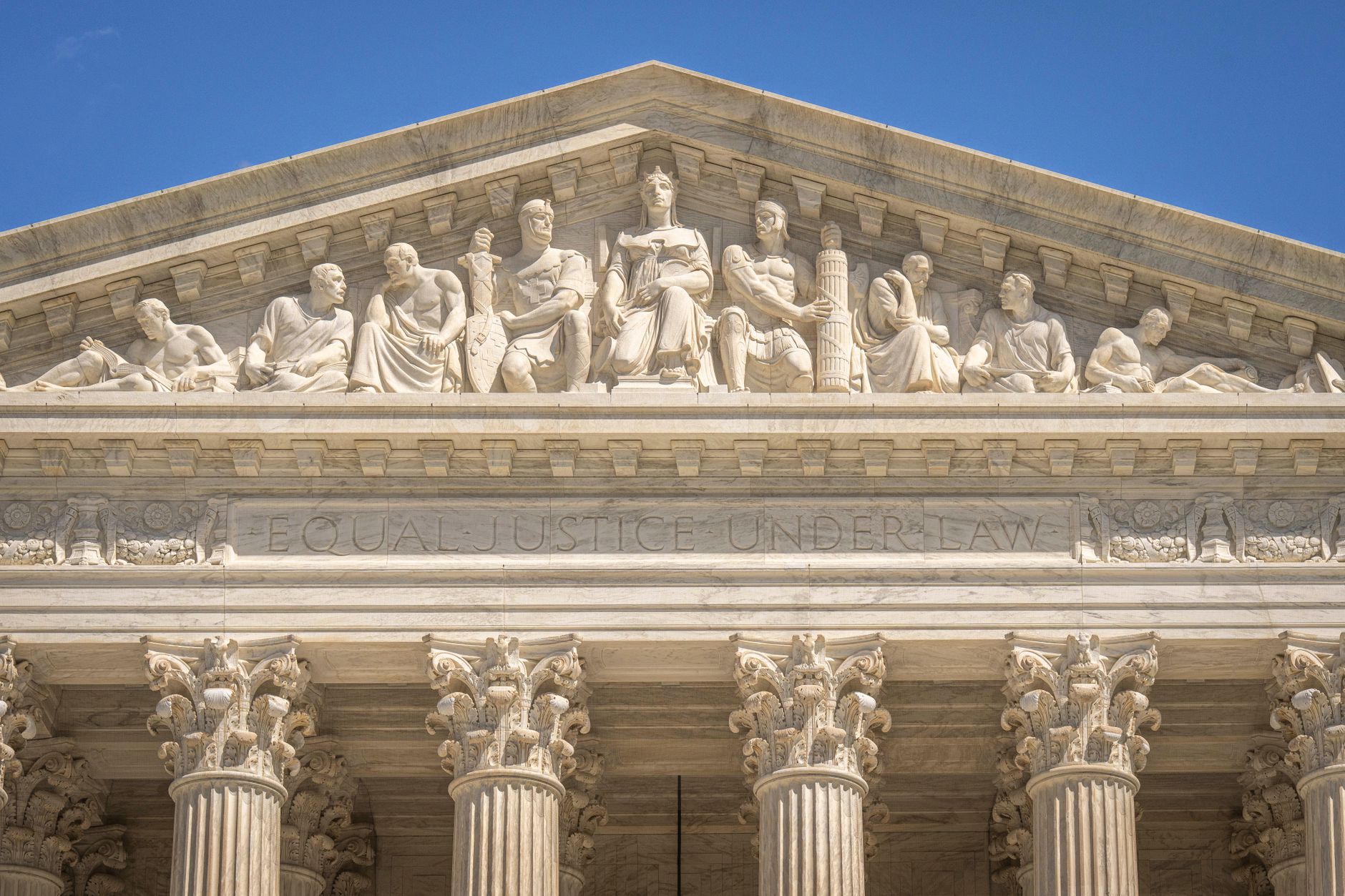
On June 25, 2026, the U.S. Supreme Court issued a 7-2 decision in Monsanto v. Durnell (case 24-1068) that fundamentally altered the legal landscape for herbicide injury claims. The ruling held that the Federal Insecticide, Fungicide, and Rodenticide Act (FIFRA) preempts state-law failure-to-warn claims when the EPA has already made a definitive determination on product safety. This decision came just months after a $7.25 billion nationwide class-action settlement was proposed in February 2026 to resolve Roundup claims alleging non-Hodgkin lymphoma injuries—and it immediately complicated litigation that was already underway. Meanwhile, in a Chicago courtroom, a separate Roundup case resulted in a mistrial after a judge determined that defense counsel had engaged in “serious misconduct” by introducing a prejudicial reference to the plaintiff’s past criminal charge during cross-examination.
Together, these events illustrate how a Supreme Court victory for pesticide makers can coexist with courtroom setbacks, and how the legal battlefield has shifted even as injured plaintiffs pursue their claims. The Supreme Court’s decision in Monsanto v. Durnell is not simply a ruling; it is a recalibration of federal authority over product safety. When the EPA approves a pesticide label and determines that the product, when used as directed, does not pose an unreasonable health risk, states can no longer tell their juries that the manufacturer should have warned consumers differently. This principle affects not only Roundup but potentially thousands of agricultural and household chemical products, making it one of the most significant product-liability rulings in recent years. Yet even as Monsanto’s parent company, Bayer, declared victory, legal experts cautioned that the ruling, while landmark, was not a complete “silver bullet” for pesticide makers—other legal strategies remain available to plaintiffs and their attorneys.
Table of Contents
- What Does the Supreme Court’s FIFRA Preemption Ruling Actually Mean?
- The Monsanto v. Durnell Case and the Preemption Principle
- The $7.25 Billion Settlement and Its Complicated Timing
- The Chicago Mistrial—When Defense Misconduct Trumps Preemption
- Remaining Legal Strategies for Plaintiffs After Preemption
- Bayer’s Broader Strategy and the Limits of the Supreme Court Victory
- The Ongoing Litigation Landscape and Practical Implications for New Claimants
What Does the Supreme Court’s FIFRA Preemption Ruling Actually Mean?
The Federal Insecticide, Fungicide, and Rodenticide Act (FIFRA) is the federal statute that governs pesticide safety. Since its enactment in 1947, it has granted the epa regulatory authority over product labels, safety data, and risk assessments. For decades, a tension simmered in American law: if the EPA approves a pesticide label, can a state court allow a jury to conclude that the manufacturer should have warned consumers more strongly? The Supreme Court’s decision in Monsanto v. Durnell answers that question firmly: no, not when the EPA has made a definitive determination on the product’s safety profile. When federal regulators have already weighed the evidence and set the labeling requirements, state tort law—including failure-to-warn claims—must yield to federal preemption.
This ruling affects the calculus for plaintiffs alleging that Roundup caused their non-Hodgkin lymphoma or other diseases. Previously, attorneys could argue to juries that Monsanto (now owned by Bayer) knew or should have known about cancer risks but failed to provide adequate warnings on the product label or in promotional materials. Now, if the EPA previously approved Roundup’s label and the plaintiff cannot show that the EPA’s determination was itself flawed or based on incomplete information, the jury may never hear a failure-to-warn argument at all. The decision does not prevent claims based on fraud, misrepresentation, or allegations that the manufacturer withheld data from regulators—but it removes one of the most straightforward pathways to liability in product-injury cases. The 7-2 vote was not unanimous, meaning even two justices dissented, though their concerns were not widely publicized. What mattered most for Monsanto and Bayer was the breadth of the majority’s reasoning, which extended federal preemption across state lines and made clear that the principle would apply to future pesticides and herbicides, not just existing Roundup litigation.
The Monsanto v. Durnell Case and the Preemption Principle
The case of Monsanto v. Durnell itself originated when a plaintiff sued alleging that long-term exposure to Roundup had caused non-Hodgkin lymphoma. Under state tort law, particularly in the plaintiff’s home state, the case could have proceeded on the theory that the manufacturer had a duty to warn about risks of cancer, and that failing to do so—or failing to warn prominently enough—constituted negligence or breach of warranty. Monsanto filed a motion asserting federal preemption under FIFRA, and the case made its way through lower courts before reaching the Supreme Court. The Supreme Court’s majority opinion focused on the clarity of the EPA’s role. The EPA had reviewed Roundup and its active ingredient, glyphosate, and made determinations about safe use. Those determinations were based on a comprehensive regulatory process, including public comment and scientific review.
If states could override those determinations through jury verdicts in individual lawsuits, the majority reasoned, it would undermine the uniformity and efficiency that Congress intended when it created FIFRA. A pesticide manufacturer would face thousands of juries reaching different conclusions about the same product’s safety, creating a patchwork of liability that would make it impossible to market any product consistently across the country. For Bayer, this ruling was both a victory and a reminder that the litigation was far from over. The company characterized the decision as “landmark,” and indeed, it blocks an important class of claims going forward. However, as legal experts have noted, the ruling does not prevent plaintiffs from pursuing other theories of liability—such as fraud, failure to disclose safety data to the EPA, or manufacturing defects. The Supreme Court decision also does not retroactively overturn jury verdicts that had already been entered before June 25, 2026, though it will likely affect appeals of prior verdicts. A plaintiff who can show that Monsanto actively concealed information from the EPA, or lied to regulators, may still have a viable claim even after Monsanto v. Durnell.
The $7.25 Billion Settlement and Its Complicated Timing
In February 2026, before the Supreme Court issued its June decision, Bayer announced a proposed nationwide class-action settlement worth $7.25 billion to resolve Roundup claims alleging non-Hodgkin lymphoma and other injuries. This settlement was one of the largest in U.S. legal history, reflecting the company’s desire to resolve the mass of pending litigation and reduce its legal exposure. For many plaintiffs, the $7.25 billion fund offered a concrete payout rather than the uncertainty of continued litigation. Some received millions of dollars; others received smaller amounts depending on the severity of their injuries and the fund’s allocation formulas. The settlement was structured to cover claimants who had been exposed to Roundup before the settlement’s approval date and could document a diagnosis of non-Hodgkin lymphoma within a specified timeframe. The fund also included compensation for a limited number of other alleged injuries, though non-Hodgkin lymphoma was the primary focus.
By the time the settlement was announced in February 2026, Monsanto’s legal team was likely already bracing for the Supreme Court decision, and some analysts speculated that the $7.25 billion settlement figure itself reflected the company’s assessment of the downside risk if failure-to-warn claims were allowed to proceed in multiple venues. After the June 25 Supreme Court ruling, however, the settlement’s context shifted. New plaintiffs filing claims alleging Roundup injury would face the preemption bar created by Monsanto v. Durnell, making settlement less attractive to them than it might have been under the old legal regime. Plaintiffs already in the settlement, however, were largely unaffected—their claims had already been resolved, and the settlement fund would continue to pay out. For future litigation, though, the landscape changed dramatically. Attorneys representing new plaintiffs would need to rethink their case strategy, potentially focusing on fraud and concealment claims rather than the simpler failure-to-warn theory that had previously succeeded in some jury trials.
The Chicago Mistrial—When Defense Misconduct Trumps Preemption
While the Supreme Court ruling was reshaping the broader legal battlefield, individual cases continued to proceed in courts across the country. In Chicago, a Roundup injury case reached trial, but the proceedings did not go smoothly for the defense. During cross-examination of the plaintiff, defense counsel introduced a reference to a past criminal charge against the plaintiff. The judge, reviewing the conduct, determined that this reference was prejudicial and violated courtroom procedure. More significantly, the judge called the conduct “serious misconduct,” indicating that the defense attorney had not merely made a mistake but had deliberately or recklessly introduced evidence designed to inflame the jury against the plaintiff rather than address the merits of the case.
📨 Get Free Mass Tort Guides Alerts
Free · No spam · Unsubscribe anytime
The mistrial was declared, meaning the jury’s deliberations were discarded and the case would have to be retried. This outcome illustrates a key principle in litigation: even when the law favors one side—as the Supreme Court ruling favored Monsanto and Bayer—individual judges retain the power to sanction courtroom misconduct and protect the integrity of the proceedings. The Chicago mistrial suggests that future Roundup trials, while constrained by the preemption ruling on failure-to-warn claims, may still involve hard-fought disputes over what evidence is admissible and whether defense counsel stays within ethical boundaries. For plaintiffs, the mistrial in Chicago also highlighted a potential silver lining: the decision to overturn the trial proceedings meant that the case would be retried, giving the plaintiff a second opportunity to present their case. However, the retrial would proceed under the new legal landscape established by Monsanto v. Durnell, meaning the failure-to-warn claim that might have been central in the original trial could be preempted in the second trial.
Remaining Legal Strategies for Plaintiffs After Preemption
Although the Supreme Court ruling forecloses the failure-to-warn claim as a standalone theory, it does not eliminate all paths to liability. Plaintiffs’ attorneys have identified several strategies that may still succeed even after Monsanto v. Durnell. The most promising is a fraud or concealment claim: if Monsanto actively misled the EPA by withholding safety data, submitting false test results, or mischaracterizing the risks of glyphosate, plaintiffs may still pursue damages for fraudulent inducement. Such claims require proving that the company knew of the risk, concealed it, and acted with intent to deceive, but the legal bar for fraud is different from the bar for simple failure-to-warn. A second strategy is a manufacturing-defect claim. If a particular batch of Roundup was contaminated or formulated differently than the EPA-approved specification, a plaintiff might argue that the product was defective at the time of manufacture, independent of any failure to warn.
Similarly, some attorneys are exploring claims based on the theory that Monsanto’s promotional materials or advertising made specific health claims that were false or misleading, separate from the adequacy of the label warnings. These claims do not directly challenge the EPA’s regulatory judgment; instead, they argue that the manufacturer went beyond the label and made additional representations that were untrue. A significant limitation is that all of these alternative strategies require stronger evidence and more rigorous proof than a failure-to-warn claim. A failure-to-warn claim often rested on showing that a reasonable manufacturer would have added a warning; a fraud claim requires proving that the company knew, intended to deceive, and acted with scienter. As a result, many plaintiffs and their attorneys have found the post-Monsanto v. Durnell environment more challenging. Class actions are harder to certify, settlements are likely to be smaller, and individual trials are more expensive and uncertain.
Bayer’s Broader Strategy and the Limits of the Supreme Court Victory
Bayer has described the Monsanto v. Durnell ruling as a “landmark” victory, and by the numbers, it is. The preemption doctrine eliminates a category of claims that had previously resulted in hundreds of millions of dollars in verdicts and settlements. However, legal experts have cautioned that the ruling is not a complete “silver bullet” for pesticide makers. This phrase—repeated in legal commentary after the decision—reflects an important truth: while the Supreme Court ruling is powerful, it does not resolve all Roundup litigation, and Bayer’s legal exposure remains substantial.
First, the ruling applies only to failure-to-warn claims based on state law. It does not bar fraud claims, as noted above, and it does not affect claims brought before the ruling was issued. Second, the ruling applies only when the EPA has made a “definitive determination” about product safety. If a plaintiff can argue that the EPA’s determination was based on incomplete information, or if the plaintiff can show that the agency’s determination has since been revised or undercut by new scientific evidence, there may be room to challenge the preemption defense. Third, the ruling is about federal preemption of state tort law; it does not affect contract claims, warranty claims under the Uniform Commercial Code, or other non-tort theories of liability. Bayer’s litigation team must remain vigilant on multiple fronts, not just failure-to-warn claims.
The Ongoing Litigation Landscape and Practical Implications for New Claimants
For plaintiffs who have recently been diagnosed with non-Hodgkin lymphoma and believe that Roundup exposure was a contributing cause, the situation after June 25, 2026, is more complicated than it was before. If the plaintiff is not part of the $7.25 billion settlement (perhaps because they were not exposed before a certain cutoff date, or because their injury was not recognized within the settlement parameters), they face the barrier created by Monsanto v. Durnell. Their attorney will likely advise them that a simple failure-to-warn claim will not proceed past a motion to dismiss, and that the case will need to rely on fraud, misrepresentation, or other alternative theories. Additionally, new plaintiffs who wish to join existing class actions must move quickly.
The window for filing claims in many of the structured settlements is limited, often set at a specific number of years after diagnosis or after the settlement’s approval. Some settlement programs close their claims periods within a few years. A new plaintiff who delays may find that the settlement is no longer accepting new claims, forcing them to pursue individual litigation under the more difficult legal standard established by the preemption ruling. For claimants who do successfully join a settlement, the composition of the fund—the total amount available for all eligible claimants—will determine how much they receive. If a large number of eligible claimants come forward, each individual payment may be smaller. If fewer claims are filed than anticipated, payments may be larger per claimant.
- —
You Might Also Like
- Supreme Court Herbicide Ruling Poses Major Threat to Michigan Farming
- Glyphosate Herbicide Manufacturer Wins as Supreme Court Limits Health-Related Lawsuits
- Bayer Roundup Lawsuit Shield Gets Supreme Court Decision Support