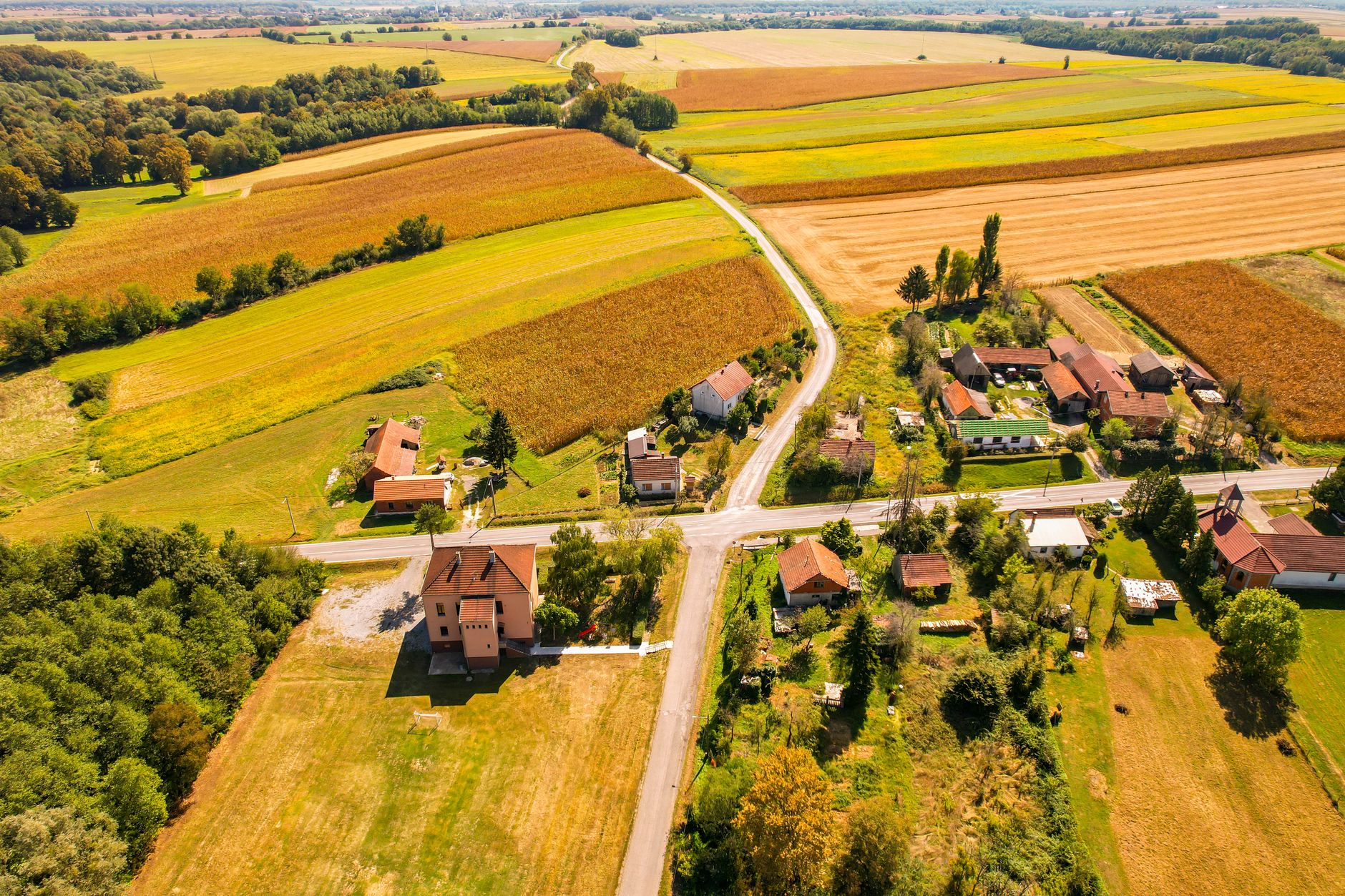
Where a mass tort claimant lives can change the size of their settlement check, even with an identical injury. Settlement formulas built on population, local wage data, and legal access systematically route more money toward urban claimants, while rural residents face separate structural barriers just to file a claim at all. This gap shows up in two distinct places: how settlement funds get divided geographically, and how individual payout formulas value a claim. Both mechanics matter for anyone trying to understand why a neighbor's settlement check looked different from their own, or why a rural county received far less from a national settlement than a nearby city.
Official resources:
- Read the official notice from Kffhealthnews — Use this primary source to verify the official announcement.
- Explore the official data from Herald Dispatch — Use this primary source to review the underlying data.
Table of Contents
- How Settlement Funds Get Divided by Geography
- Do Juries in Rural Counties Award More or Less?
- Why Rural Claimants Struggle to Reach a Lawyer in the First Place
- How Wage-Based Formulas Lower Rural Payout Amounts
- Frequently Asked Questions
How Settlement Funds Get Divided by Geography
When a mass settlement pays out state or county shares, the formula usually starts with population. The 2021 national opioid settlements, worth roughly $26 billion, split state shares using a formula built on population size along with overdose deaths, residents with opioid use disorder, and prescription volume, according to KFF Health News. Because raw overdose counts rise simply as population rises, this approach mathematically favors populous counties over rural ones, even when a rural county's death rate per capita is far worse. North Carolina's county-level split shows the effect in concrete numbers. Pamlico County, a rural county with the state's highest overdose-death rate over the prior decade, is set to receive about $773,000 over roughly 18 years.
Urban Wake County, whose death rate ranked just 87th in the state, is set to receive $36 million over the same period, per the same KFF Health News reporting. The disparity comes entirely from how the formula weights population against severity. Not every state used the same math, and the differences reveal what can be done differently. Pennsylvania built its county formula around opioid hospitalizations and naloxone administrations rather than raw population counts. When that approach still left 11 rural counties underfunded, the state added a $1 million minimum guarantee per county over the 18-year payout period, according to KFF Health News. West Virginia took the dispute further: its attorney general refused to join several national opioid settlement deals, arguing that distribution formulas should reflect the severity of a region's crisis rather than its population, since the state carries a high rural overdose burden with a comparatively small population.
Do Juries in Rural Counties Award More or Less?
The evidence on jury verdicts is genuinely split, and readers should know both sides before assuming a pattern. Economists Alexander Tabarrok and Eric Helland, analyzing tens of thousands of U.S. tort verdicts, found that average jury awards roughly triple — from about $400,000 to about $1.3 million — as a county's poverty rate rises from 4.1% to 21.9%, according to the Independent Institute. Because poorer counties are often rural, this research suggests rural juries can produce larger individual verdicts, not smaller ones. A separate study complicates that conclusion.
Researchers examining 156 U.S. counties using Bureau of Justice Statistics verdict data found no statistically significant correlation between a county's urban or rural classification, or its median household income, and the final jury award amount, according to the Panhandle Journal study from West Texas A&M University. This directly contradicts a simple rural-urban payout gap for individual verdicts. These two findings are not necessarily incompatible. Tabarrok and Helland's data centers poverty rate as the driver, while the Panhandle Journal study tested rural/urban classification and income separately. A claimant in a poor rural county and a claimant in a wealthy rural county may face very different jury dynamics, which is why settlement-fund allocation formulas — not individual verdicts — are the more consistent source of rural disadvantage described in Section 1.
Why Rural Claimants Struggle to Reach a Lawyer in the First Place
Before any formula or jury ever gets involved, a rural claimant has to find counsel, and that step is where many rural mass-tort claims disappear. More than 50 Illinois counties have fewer than one practicing attorney per 1,000 residents, and a nonprofit found that nearly two-thirds of Alabama's counties meet that same "legal desert" threshold, according to data reported by 2Civility. That scarcity directly limits how many rural residents ever connect with mass-tort counsel compared with metro-area claimants.
📨 Get Free Mass Tort Guides Alerts
Free · No spam · Unsubscribe anytime
The shortage traces back to why lawyers choose where to practice. California's Commission on Access to Justice identified high law-school debt and attorneys' general lack of interest in serving rural communities as the two largest reasons lawyers avoid rural practice, according to the Commission's 2019 report. Fewer local attorneys means fewer people positioned to identify, screen, and file rural mass-tort claims in the first place — a barrier that has nothing to do with the merits of the claim itself.
- A rural claimant who cannot locate local counsel may need to search for attorneys who handle multistate mass-tort intake remotely, since many national plaintiff firms accept clients regardless of county.
- A legal desert does not mean a claim is invalid; it means the claim is less likely to be filed and included in a settlement class at all.
How Wage-Based Formulas Lower Rural Payout Amounts
Even when a rural claimant successfully files and qualifies for a settlement, the payout formula itself can produce a smaller number. Mass-tort settlement matrices calculate lost-wage components using Bureau of Labor Statistics Occupational Employment and Wage Statistics data broken out by geographic area, according to a methodology summary citing BLS OEWS data. That means an identical injury scored against lower rural wage tables produces a smaller economic-loss payout than the same injury scored against higher metro-area wages.
This is a structural feature of how lost-wage damages get calculated, not an error in any individual claim review. Two claimants with the same injury, the same job title, and the same lost work time can receive different economic-loss amounts purely because their local wage data differs. Claimants reviewing a settlement offer can ask the claims administrator which geographic wage table was applied to their claim and confirm it matches their actual work location and occupation code, since a misapplied table is a correctable error even though the underlying geographic gap is not.
Frequently Asked Questions
Does living in a rural area always mean a smaller settlement check?
Not necessarily for jury verdicts — the Panhandle Journal study found no significant rural/urban difference in award amounts, while Tabarrok and Helland's research tied larger awards to county poverty rate instead. The clearer rural disadvantage shows up in fund-allocation formulas, like the opioid settlements, and in wage-based payout matrices.
Why did some states handle rural allocation differently than others?
Pennsylvania added a minimum per-county guarantee after its hospitalization-based formula still left 11 rural counties underfunded, while West Virginia's attorney general refused to join settlements using population-based formulas at all, according to KFF Health News reporting.
You Might Also Like
- Why Gender Matters in Demographic Mass Tort Settlement Eligibility
- How Occupational History Affects Demographic Mass Tort Liability Claims
- How Are Demographic Groups Defined in Mass Tort Litigation Claims?