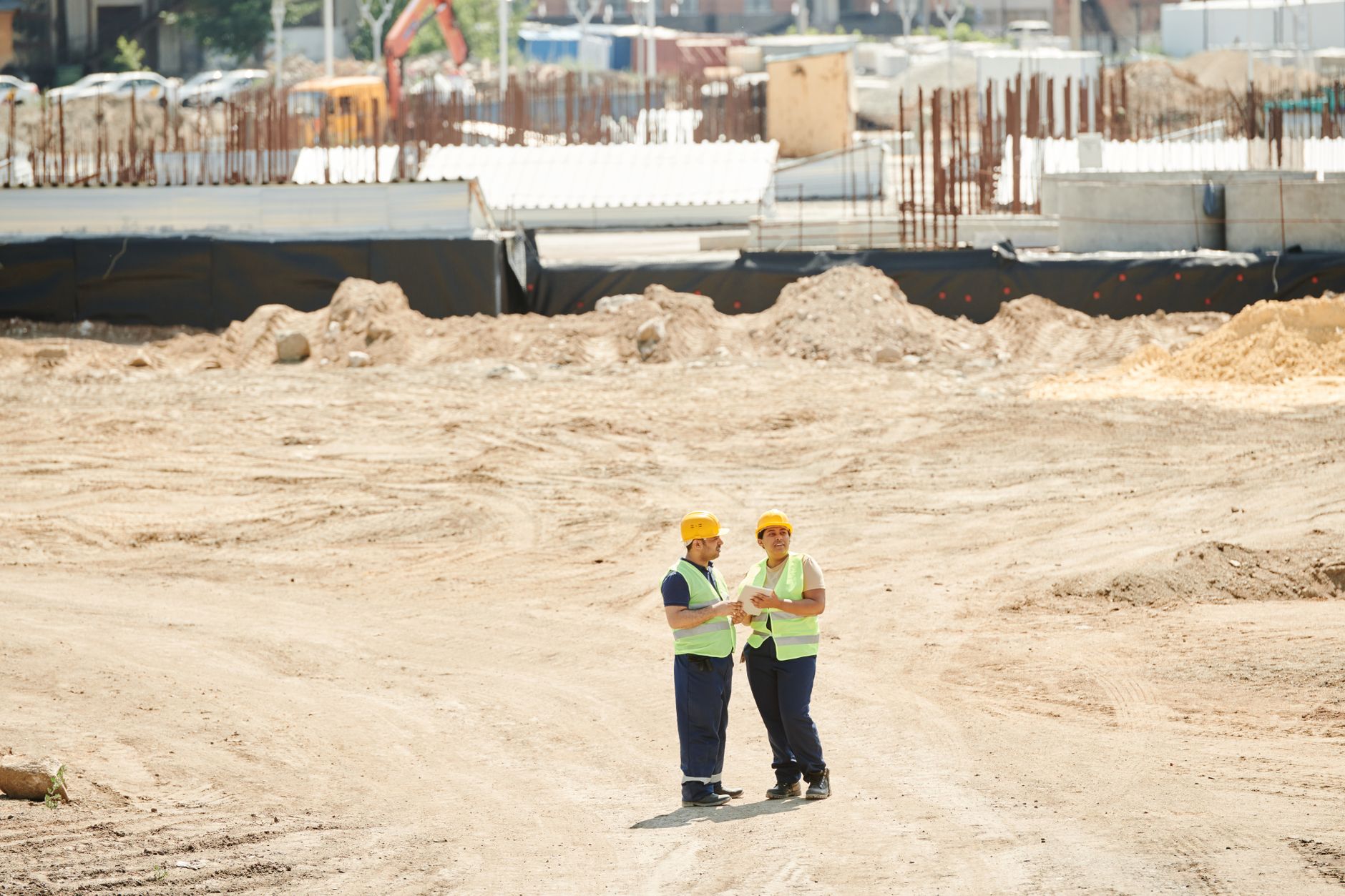
In a construction site negligence lawsuit, liability is assigned by role and control, not by job title — courts and regulators ask who created the hazard, who was exposed to it, who had the duty to correct it, and who had authority over the site. That test means a general contractor, a subcontractor, a property owner, and an equipment supplier can all be on the hook for the same fall or the same backing accident, in different proportions. Two separate systems run in parallel. OSHA assigns regulatory fault and penalties under its own multi-employer framework, while a civil negligence claim assigns money damages under state law — and state law is where the outcome actually diverges, because one state imposes near-absolute liability for height-related injuries and most do not.
Official resources:
- Explore the official data from Bls — Use this primary source to review the underlying data.
- Read the official guidance from Bls — Use this primary source to verify the official guidance.
Table of Contents
- The four roles that decide who gets cited
- Which hazards actually produce these cases
- What an OSHA citation is worth — and what it is not
- New York's Scaffold Law is the outlier that changes everything
- Can the injured worker sue the general contractor at all?
- Practical steps after a jobsite injury
- Frequently Asked Questions
The four roles that decide who gets cited
OSHA's Multi-Employer Citation Policy, directive CPL 02-00-124, has governed this since December 1999. It lets the agency cite more than one employer for a single hazard, sorting each into one of four roles: the **creating** employer who caused the condition, the **exposing** employer whose workers are in its path, the **correcting** employer assigned to fix it, and the **controlling** employer with general supervisory authority over the site. An employer can occupy more than one role at once. The directive applies a two-step test — what duty did this employer have, and did it meet that duty with reasonable care? According to OSHA's multi-employer directive, the role turns on actual authority rather than what the contract calls someone.
That distinction is the one plaintiffs' lawyers work hardest. The controlling-employer role is normally the general contractor's, and analysis of the directive by Jackson Lewis and J. J. Keller notes OSHA's own 2001 interpretation letter holding that responsibility depends on role, not title. A GC that hired a subcontractor and then never supervised it can still be cited for that sub's hazard.
Which hazards actually produce these cases
Two hazard classes dominate. The Bureau of Labor Statistics recorded 389 construction deaths from falls, slips and trips in 2024, and 95.9% of those were falls to a lower level. Transportation incidents killed 244 construction workers — roughly a quarter of jobsite deaths — which is why fall protection and vehicle or equipment control are the two theories most often litigated as negligence. The overall numbers set the scale.
BLS reported 1,034 fatal work injuries in private construction in 2024, down 3.8% from 1,075 in 2023, at a rate of 9.2 deaths per 100,000 full-time-equivalent workers. That decline still left construction with more deaths than any other private industry. Fall protection is also where the paper trail is thickest. OSHA's construction fall-protection standard, 29 CFR 1926.501, was the most-cited standard in fiscal 2025 for the fifteenth consecutive year, with 6,992 violations in the final data, concentrated among roofing, framing and siding contractors. A prior citation under that standard at the same company is the kind of fact that reframes a later accident as foreseeable rather than freakish.
What an OSHA citation is worth — and what it is not
A citation is evidence, not a verdict, and the penalty money does not go to the injured worker. Penalty amounts are also flat this year: an OSHA memorandum dated May 21, 2026 holds 2025 figures in effect — $16,550 maximum per serious or other-than-serious violation and $165,514 per willful or repeat violation. The adjustment statute requires the October 2025 CPI-U, and the fall 2025 government shutdown stopped BLS from publishing it.
Put those figures next to a single fatality or a spinal injury and the mismatch is obvious. Regulatory penalties are priced to deter, not to compensate. The civil case is the only route to medical costs, lost earnings, and pain and suffering. Where the citation earns its keep is in the civil file:.
- It identifies which standard was violated, giving the negligence claim a specific duty to point at.
- It names which employers OSHA placed in which role, including the controlling employer.
- A **willful** or **repeat** characterization signals knowledge, which supports claims beyond ordinary negligence.
- The underlying inspection file preserves witness statements and site conditions that vanish within days.
New York's Scaffold Law is the outlier that changes everything
If the injury happened in New York and involved height or gravity, the analysis is different from every other state. New York Labor Law § 240(1) places a non-delegable duty on all contractors, owners and their agents to furnish and operate scaffolding, hoists, ladders, slings, braces and ropes so as to give proper protection. Courts read it as absolute liability for a gravity-related injury proximately caused by a missing or inadequate device — regardless of how careful the worker was. Non-delegable means a contractor cannot push the duty onto a sub by contract.
📨 Get Free Mass Tort Guides Alerts
Free · No spam · Unsubscribe anytime
Owners of one- and two-family dwellings who do not direct or control the work are exempt, which carves out most residential homeowner projects. The statute has a real ceiling, though. As the Big I New York Scaffold Law guide explains, an accident by itself does not establish a violation, and a defendant can still win by proving the worker's own conduct was the sole proximate cause — a worker who ignored an available, adequate harness, for example. Commentators note no other state has an equivalent statute, so a case that is nearly automatic in Brooklyn is an ordinary negligence fight in Ohio.
Can the injured worker sue the general contractor at all?
This is the threshold question, and it is decided by workers'-compensation exclusivity — the rule that comp benefits are the only remedy against your own employer. A worker injured by a subcontractor's crew normally cannot sue that employer, so the case targets the GC, the owner, or an equipment maker instead. Whether that works depends on the state, and on who paid for the comp coverage. Illinois drew the line narrowly. In *Munoz v.
Bulley & Andrews, LLC*, 2021 IL 127067, the Illinois Supreme Court held in November 2021 that exclusive-remedy immunity did not extend to a general contractor that was not the worker's immediate employer, even though the GC had paid the comp premiums and the benefits themselves. Texas has gone the other way, with an appeals court upholding immunity for a contractor that covered its subcontractors through a controlled insurance program. The practical takeaway: the same accident, with the same contract structure and the same insurance arrangement, yields a viable third-party suit in one state and a dismissal in another. Find out early which rule governs the jobsite's state, because it determines whether there is a defendant worth naming.
Practical steps after a jobsite injury
.
- Report the injury to your own employer in writing and open the workers'-compensation claim, even if you intend to sue someone else — the two run on separate tracks and separate deadlines.
- Check whether OSHA opened an inspection of the site, and note the specific standards cited and which employers were named.
- Preserve the contract chain: who hired whom, who was responsible for the scaffold, lift, or guardrail, and who ran the daily safety meetings.
- Photograph the condition and the equipment, including serial plates and missing components, before the site is cleaned up.
- Identify every employer present, not just yours — the creating, exposing, correcting and controlling roles may sit with four different companies.
Frequently Asked Questions
Can more than one company be held responsible for the same hazard?
Yes. OSHA's multi-employer policy expressly allows citations against several employers for a single condition, and an employer can fall into more than one of the four roles at once.
Does an OSHA citation mean I automatically win a negligence case?
No. A citation establishes a violated standard and penalty liability to the government; a negligence claim still requires proving duty, breach, causation and damages under state law.
Why does the state matter so much?
Liability allocation is state-specific. New York's § 240(1) imposes absolute liability for gravity-related injuries with no equivalent elsewhere, and states split on whether a general contractor shares an employer's comp immunity.
What is a "controlling employer"?
An employer with general supervisory authority over the worksite — typically the general contractor — including the authority to correct safety violations, whether or not it actually exercised it.
You Might Also Like
- Security Negligence Lawsuit: When Is a Property Liable for Injury?
- School Bus Negligence Lawsuit: Who Can File an Injury Claim?
- Rideshare Negligence Lawsuit: What Compensation Covers Injury