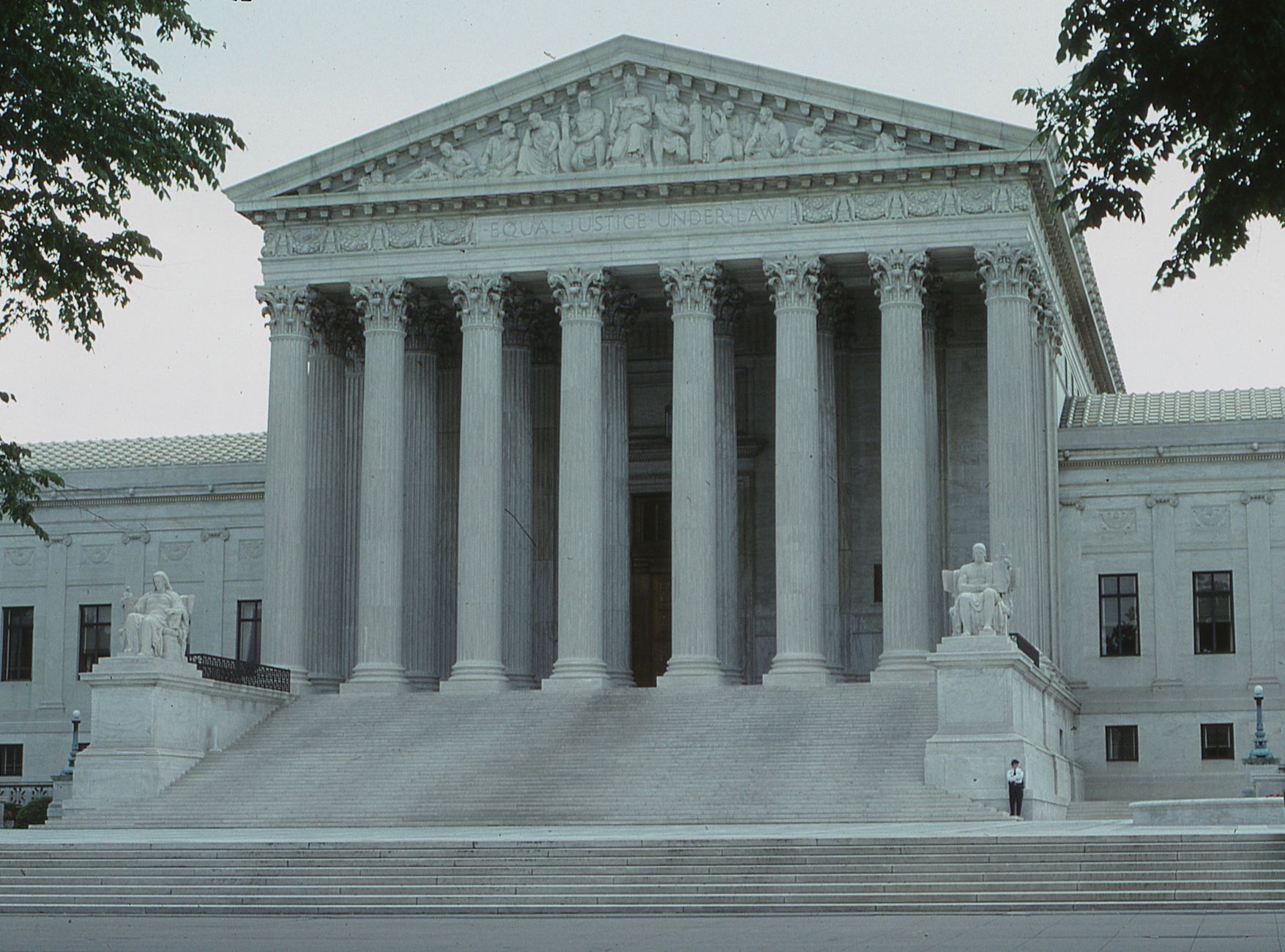
On June 25, 2026, the U.S. Supreme Court issued a landmark 7-2 decision that fundamentally shields Monsanto from failure-to-warn liability in state courts. In Monsanto v. Durnell (Case 24-1068), Justice Brett Kavanaugh wrote the majority opinion holding that the Federal Insecticide, Fungicide, and Rodenticide Act (FIFRA) expressly preempts state-law-based failure-to-warn claims when the EPA has already approved product labeling. The ruling overturned a Missouri jury’s $1 million verdict against Monsanto in favor of John Durnell, a man who alleged he developed non-Hodgkin’s lymphoma after approximately 20 years of using Roundup herbicide. This decision represents a seismic shift in how American courts will handle thousands of pending Roundup-related injury claims.
Previously, state juries could award damages based on the theory that Monsanto failed to adequately warn consumers about cancer risks, even though the EPA had determined the product safe. Under the new federal preemption standard, this avenue of liability is now closed. The Supreme Court’s ruling applies prospectively to cases still working through state court systems, effectively blocking failure-to-warn litigation nationwide. The Durnell case itself serves as a concrete example of what the ruling changes. A Missouri state court jury had sided with Durnell, finding that Monsanto’s labeling was insufficient to warn users about non-Hodgkin’s lymphoma risk and awarding him compensation for his injury and suffering. The Supreme Court found that judgment conflicted with FIFRA’s framework, which vests the EPA—not state juries—with authority to set herbicide safety standards and labeling requirements.
Table of Contents
- How Does Federal Law Preempt Roundup Failure-to-Warn Claims?
- The Monsanto v. Durnell Case: How a $1 Million Verdict Was Overturned
- Impact on Thousands of Pending Roundup Lawsuits Nationwide
- The Majority Opinion: Understanding the 7-2 Vote and Kavanaugh’s Reasoning
- Important Limitations: What This Ruling Does Not Cover
- The February 2026 Settlement: A Parallel Resolution Outside Litigation
- What Plaintiffs Can and Cannot Do After Monsanto v. Durnell
How Does Federal Law Preempt Roundup Failure-to-Warn Claims?
The supreme Court grounded its decision in a straightforward reading of the Federal Insecticide, Fungicide, and Rodenticide Act. FIFRA is a comprehensive federal statute that gives the EPA exclusive power to approve, label, and regulate pesticide products. When a company like Monsanto seeks to sell a pesticide, it must submit safety data to the EPA, which then determines whether the product is safe and sets the labeling requirements. Under the Court’s reading, once the EPA has made that determination and approved the label, state courts cannot second-guess that judgment through jury verdicts based on inadequate warning theories. This preemption doctrine has a long history in American law. Federal law preempts state law when Congress explicitly preempts it, when there is a direct conflict, or when federal regulation is so comprehensive that Congress intended to occupy the entire field.
FIFRA falls into the third category—the EPA’s regulatory scheme over pesticides is so detailed and science-based that allowing individual state courts to override EPA-approved labeling would undermine the entire federal system. Imagine if every state had a different standard for pesticide warnings; manufacturers would face impossible compliance burdens and the market would fragment into 50 different regulatory regimes. Justice Kavanaugh’s 7-2 majority emphasized that plaintiffs are not left without remedies entirely. They can still pursue design-defect claims if they can prove the pesticide itself is defective, independent of warnings. They can also pursue fraudulent concealment or failure-to-disclose claims if they can show Monsanto deliberately hid information from the EPA. But the specific avenue of failure-to-warn, based on the theory that the EPA-approved label was inadequate, is preempted.
The Monsanto v. Durnell Case: How a $1 Million Verdict Was Overturned
John Durnell’s case became the vehicle for this sweeping change. Durnell used Roundup for approximately two decades—whether as a homeowner, farmer, or landscaper, his long-term exposure was a central fact of the litigation. Over time, he developed non-Hodgkin’s lymphoma, a cancer of the lymphatic system. He sued Monsanto in Missouri state court, alleging that the company knew or should have known about cancer risks but failed to warn consumers adequately. The Missouri jury heard the evidence and sided with Durnell. They awarded him more than $1 million in damages based on the failure-to-warn theory.
This outcome was not unusual; multiple juries across the country had reached similar conclusions in earlier Roundup cases, creating financial exposure for Monsanto and pressure to settle. However, the company appealed, arguing that the verdict conflicted with federal law. The case ascended through Missouri’s appellate courts and ultimately reached the U.S. Supreme Court, where the nation’s highest justices agreed to resolve the question of whether state courts could impose failure-to-warn liability in tension with the EPA’s regulatory approval. A critical limitation of this ruling is that it does not address whether the EPA’s approval process was adequately rigorous or whether the agency properly weighed all available scientific evidence about cancer risks. Some environmental and consumer advocates argue that the EPA’s review was insufficiently protective and that allowing state juries to second-guess it was an appropriate check on regulatory capture. The Supreme Court did not revisit the EPA’s underlying scientific judgments; it simply held that those judgments preempt state litigation once made.
Impact on Thousands of Pending Roundup Lawsuits Nationwide
The practical effect of Monsanto v. Durnell is staggering. Before the decision, tens of thousands of Roundup-related claims were pending in state courts and some federal courts across the country. Many of these cases centered on non-Hodgkin’s lymphoma allegations similar to Durnell’s. Trial dates were set, discovery was proceeding, and settlement negotiations were ongoing. The Supreme Court’s ruling changed the legal landscape instantly. Any failure-to-warn claim based on the theory that Monsanto’s EPA-approved labeling was inadequate is now barred by federal law.
Trial courts must dismiss these claims. Cases that had already won jury verdicts (like Durnell’s) face reversal. Cases still in settlement negotiations face dramatically reduced value because plaintiffs can no longer pursue the failure-to-warn theory—one of the most sympathetic and successful litigation strategies against pesticide manufacturers. However, the decision does not eliminate all Roundup litigation. Plaintiffs can still pursue other theories, such as design-defect claims or claims based on fraudulent concealment if they can allege and prove that Monsanto actively deceived the EPA or withheld material safety data. Some cases may proceed on alternative theories; others may be dismissed entirely. The ruling creates a clear dividing line: federal preemption bars state-level failure-to-warn theories, but other avenues remain theoretically available, though they are often harder to prove.
The Majority Opinion: Understanding the 7-2 Vote and Kavanaugh’s Reasoning
Justice Brett Kavanaugh’s majority opinion carried seven votes, a strong consensus. This breadth suggests that even justices who might have been skeptical of Monsanto’s interests on other grounds found the preemption argument legally compelling. Kavanaugh emphasized the structure of FIFRA and the fundamental incompatibility between allowing 50 states to set different standards for pesticide warnings and a federal regulatory system that rests on uniform EPA approval. The opinion contained an important caveat that some commentators interpreted as leaving room for certain types of claims. While failure-to-warn is preempted, the opinion noted that a plaintiff might still succeed on a claim that the product design itself is defective or that the manufacturer engaged in fraud or conspiracy to conceal information from federal regulators.
📨 Get Free Mass Tort Guides Alerts
Free · No spam · Unsubscribe anytime
In practice, these alternative theories are much harder to win. A design-defect claim requires proving that a reasonable alternative design existed and would have prevented the injury—a heavy burden requiring expert testimony about herbicide chemistry. A fraud claim requires clear evidence of deliberate deception, not merely disagreement over risk assessment. The two dissenters presumably argued that state courts should retain some authority to assess adequacy of warnings or that FIFRA’s preemption was not as absolute as the majority held. The dissent would likely have emphasized that Durnell and others like him deserve a day in court to make their case, and that state juries are competent to weigh evidence about warning adequacy. However, the 7-2 vote reflects the majority view that federal uniformity and EPA authority take precedence.
Important Limitations: What This Ruling Does Not Cover
The Supreme Court’s preemption doctrine is powerful but not absolute. First, it applies only to failure-to-warn claims predicated on the theory that an EPA-approved label is inadequate. If a plaintiff can prove that the actual label on a bottle was different from the EPA-approved label—or that Monsanto affirmatively misrepresented the product’s safety in advertising—those theories might escape preemption. For instance, if Monsanto marketed Roundup as “safe for children” or made claims beyond what the EPA label stated, a state court might allow a jury to consider those statements as a separate ground for liability, though courts have begun limiting this loophole in recent cases. Second, the ruling does not strip the EPA of its authority to change its own position. If the EPA were to reverse course and conclude that Roundup poses unacceptable cancer risks, it could pull the product from the market, require stronger warnings, or take other regulatory action.
Such a reversal is unlikely given the EPA’s historical stance, but it remains theoretically possible. A plaintiff cannot sue a state court to force the EPA to reconsider, but the agency could initiate its own review if new scientific evidence emerged and gained sufficient political support. Third, some state tort claims fall outside the FIFRA preemption framework entirely. For example, claims arising under state toxic tort statutes, environmental contamination laws, or worker protection statutes operate in different legal spaces and may not be preempted in the same way. A farm worker exposed to Roundup might have claims under occupational safety laws that function separately from the failure-to-warn preemption. However, courts have been increasingly aggressive in finding preemption even in these adjacent fields, so this limitation offers cold comfort to most plaintiffs.
The February 2026 Settlement: A Parallel Resolution Outside Litigation
Notably, in February 2026—just months before the Supreme Court’s decision—Monsanto announced a proposed nationwide class settlement to resolve current and future Roundup claims. This settlement came as the company anticipated unfavorable outcomes in pending state litigation and sought to establish a closure mechanism. The settlement creates a long-term compensation program for individuals claiming non-Hodgkin’s lymphoma injuries from Roundup exposure.
The settlement represents an alternative path for injured parties that does not depend on failure-to-warn liability or any state court judgment. Instead, it operates as a claims-made program where qualifying claimants can submit proof of Roundup use and medical diagnosis, and receive compensation according to a settlement formula. This approach avoids the uncertainty of jury verdicts and allows for more predictable resolution. However, settlement amounts typically reflect probability-discounted jury verdicts rather than full compensatory damages, so injured parties receive less than they might have won at trial, particularly in the pre-Supreme Court era when failure-to-warn verdicts were larger and more frequent.
What Plaintiffs Can and Cannot Do After Monsanto v. Durnell
Roundup injury plaintiffs cannot pursue failure-to-warn claims in state court based on the theory that Monsanto’s EPA-approved label failed to adequately warn about cancer risks. This pathway is permanently closed. Plaintiffs in existing lawsuits must either pivot to alternative theories, seek settlement, or abandon their claims. Plaintiffs retain theoretical options to pursue design-defect claims (arguing the product itself is unreasonably dangerous), fraud claims (alleging Monsanto concealed safety information from the EPA or consumers), or claims based on regulatory violations if they can identify a specific statute or agency action that was violated.
In practice, these alternatives face higher evidentiary burdens and lower win rates than failure-to-warn claims did. A plaintiff must now identify an affirmative act of deception or a design flaw independent of labeling, rather than simply arguing that a jury-determined label is inadequate. Expert witnesses become more critical, depositions more complex, and trial strategy more challenging. For many claimants, particularly those of modest means who cannot afford extended litigation, the calculation shifts toward settlement despite lower compensation.
- —
You Might Also Like
- Why Thousands of Herbicide Injury Claims Were Just Dismissed in Court
- Bayer Roundup Lawsuit Shield Gets Supreme Court Decision Support
- Supreme Court ruling forces mistrial in major herbicide injury lawsuit settlement